












Family Secrets 1: Empty Plate















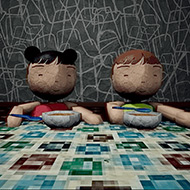
Family Secrets 1: Empty Plate never raises its voice, and that’s exactly why players keep calling it one of the saddest games they’ve played in a long time. This is a first-person psychological horror game with no combat and no puzzles to solve — just a house, a home life quietly falling apart, and a mood the game refuses to rush.
Family Secrets 1: Empty Plate Follows Miko, Jun, and an Empty House
You play Miko, an older sibling left in charge of younger sibling Jun after their mother leaves for work. What starts as an ordinary evening of caretaking gradually opens into something much heavier, built around neglect and fear inside a home that should feel safe and increasingly doesn’t. Family Secrets 1: Empty Plate touches on themes of abuse without ever needing a monster to make that feeling land.
Atmosphere Over Mechanics
There’s no fighting system and no inventory puzzles gating your progress — the entire thirty-to-forty-minute experience is built on exploration, dialogue, and pacing rather than anything you need to master mechanically. Jump scares do appear, but they’re not the game’s main tool; the dread comes more from what Miko notices and doesn’t say out loud.
Why Players Keep Calling Family Secrets 1: Empty Plate Devastating
Player comments around Family Secrets 1: Empty Plate consistently lean toward words like “sad” and “emotional” rather than typical horror-game reactions, which says a lot about where the game’s actual impact lands — it’s closer to a piece of quiet emotional drama wearing horror-game structure than a scare-focused experience.
Family Secrets 1: Empty Plate earns its reputation by trusting a short runtime and a restrained tone to do the heavy lifting — Miko and Jun’s night together doesn’t need a jump scare on every corner to leave players more shaken than most louder horror games manage.
Comments
There are no reviews yet. Be the first one to write one.