












Capybara Clicker
















What happens when a single finger tap eventually turns into a number too long to read comfortably? Capybara Clicker answers that question over dozens of short sessions rather than one sitting, stretching a plain tapping motion into a slow-building numbers game. Nobody loses, nothing chases you, and there’s no countdown pressuring your next move — just a capybara on screen and a total that only ever goes up.
Why the First Few Minutes Feel Slow on Purpose
Nothing is purchasable when a fresh save loads. Every tap adds a single point, and that stays true until the running total crosses 50, the threshold where Cursor finally becomes available to buy. A short stretch later, at 125 points, Auto Click opens up and the session shifts from purely manual taps toward something that keeps moving on its own. That gap between zero and the first two boosts is intentionally uneventful — it’s the part of Capybara Clicker that teaches restraint before the numbers start compounding.
Newcomers who skip past this stretch too fast, mashing without watching the counter, often miss the moment Cursor becomes affordable and end up sitting on wasted points instead of spending them right away. Community threads bring this up constantly as the single easiest early habit to fix.
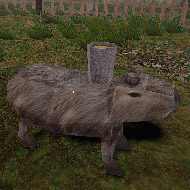
Small stray capybaras occasionally scurry past on their own, unrelated to the main one you’re tapping, and grabbing them quickly hands you a short bonus. Players speedrunning early milestones treat catching these as a genuine skill rather than a random distraction.
Reading the Energy Meter Correctly
Alongside the point counter sits a meter that fills based on tap speed rather than tap count. Keep the rhythm fast enough and it tops out, temporarily doubling whatever your taps and passive generators are already producing. This is easy to overlook on a first playthrough, since nothing on screen explains it directly, but veteran players describe short, deliberate tapping bursts as the difference between a mediocre session and a genuinely productive one.
Working Through Sixteen Upgrades
The game hides its full upgrade list behind gradual reveals; nothing sits unlocked from the very first tap. Cursor and Auto Click open the list, and further along the chain, named boosters including Mr Clicker and eventually President Clicker each push your per-tap value higher. Passive generators quietly separate this game from a pure tapping toy, since they keep the counter rising even during stretches where the tab is sitting untouched in the background.
Pricing on later upgrades climbs sharply compared to the early ones. What costs almost nothing near the start can demand a stockpile in the hundreds of thousands once you’re several unlocks deep, and spending impulsively rather than saving toward the next threshold is a habit that slows overall growth more than it helps.
That steep pricing is exactly why relying only on manual taps eventually stops making sense, pushing most players toward automation-heavy strategies instead.
Collecting Skins Without Spending Extra Currency
Reaching certain population totals swaps your capybara’s appearance automatically, no separate shop or currency required. A crowned King Capybara look and a limited seasonal Christmas design are among the more recognizable unlocks, and optional weather changes shift the backdrop’s mood without touching how quickly points accumulate. None of this feeds back into production, yet chasing the next cosmetic keeps a surprising number of players checking in far more often than the core loop alone would justify.
Achievement-minded players rarely grab every skin the instant it’s technically reachable — instead they plan a run to clear several milestones in sequence before considering a reset.
Weighing an Ascend Reset
Ascend is the one decision point in Capybara Clicker that isn’t about tapping speed at all. Triggering it wipes your current population back to zero but locks in a permanent multiplier for everything that follows, meaning the next run climbs noticeably faster from the opening tap onward. Pulling the trigger too early sacrifices progress that could’ve compounded further, while waiting too long just delays a benefit that’s already available.
Community opinion on timing splits roughly into two groups — players who reset the moment growth visibly stalls, and players who push toward one more specific milestone first, betting that the short-term loss pays off later.
Where Players Disagree About the Game
The recurring complaint about Capybara Clicker is the lack of any defined finish line. The counter keeps rising, skins keep appearing, but no ending, boss, or final challenge ever surfaces, and reactions to that split sharply — some players find the openness relaxing, others call it hollow once the capybara theme stops feeling novel. Once passive generators are doing most of the heavy lifting, a few longtime players even question whether “clicker” is still the right word for what the game has become.
How many upgrades does Capybara Clicker actually contain?
Sixteen total, divided between manual boosters like Cursor and Mr Clicker and passive generators such as Auto Click, with each one locked behind its own population requirement until you reach it.
What changes the moment you use Ascend?
Your saved population drops straight back to zero, but a permanent multiplier carries forward into the next run, so early progress afterward moves noticeably quicker than it did the first time through.
Is there a cost to unlocking new capybara skins?
No separate currency is involved — appearances like King Capybara or the seasonal Christmas design unlock the moment your total population crosses the relevant threshold, drawn straight from the capybaras you’ve already collected.
The lasting appeal of Capybara Clicker isn’t really the tapping motion itself, it’s the quiet decision-making layered underneath — holding off on an early purchase to afford President Clicker sooner, timing an Ascend reset around a milestone instead of jumping the moment it’s unlocked, and circling back for one more skin before closing the tab. None of that shows up in a single glance at the screen, but it’s what keeps the counter climbing long after the first capybara stops feeling new.
Comments
There are no reviews yet. Be the first one to write one.